Research: Public would pay more for meat with good farm welfare

A new tool for measuring the economic value of farm animal welfare improvements has been developed by researchers at the University of Reading, potentially transforming how supermarkets, shoppers and the government evaluate animal welfare policies.
Prof. Richard Bennett has created a system that assigns comparable welfare scores to different farming systems, linking them to what UK households are willing to pay for higher animal welfare.
Prof. Bennett said: “For too long, animal welfare has been difficult to factor into policy decisions because we lacked a standardised way to measure its value. This research finally provides that tool.
"Farmers, retailers and the government can now assess whether welfare improvements represent good value for money, using welfare scores based on independent expert judgment and real public preferences.”
Assessing animal welfare
The method uses a 0-100 welfare score, where zero represents extreme suffering and 100 denotes the highest achievable welfare.
An expert panel of 13 independent animal scientists assessed various farming systems, considering everything from physical health to mental wellbeing and opportunities for natural behaviours throughout an animal's life from birth to slaughter.
The research then surveyed over 3,000 UK households to determine what they would pay for welfare improvements.
it revealed that people value animal welfare improvements more highly when current conditions are poor, with willingness to pay declining as welfare standards rise.
The research evaluated different farming scenarios, revealing stark differences in welfare scores. E.g:
- Eggs: Caged hen egg production currently scores just 32 out of 100, while free-range systems score 51. The study found UK households would collectively pay £496 million per year to move the 21% of hens in cages to free-range, equivalent to 20p/egg;
- Chicken: Giving broiler chickens more space per bird would increase welfare scores from 38 to 47. This improvement, benefitting birds in their final week before slaughter, would be valued at £997 million annually, or 92p/bird;
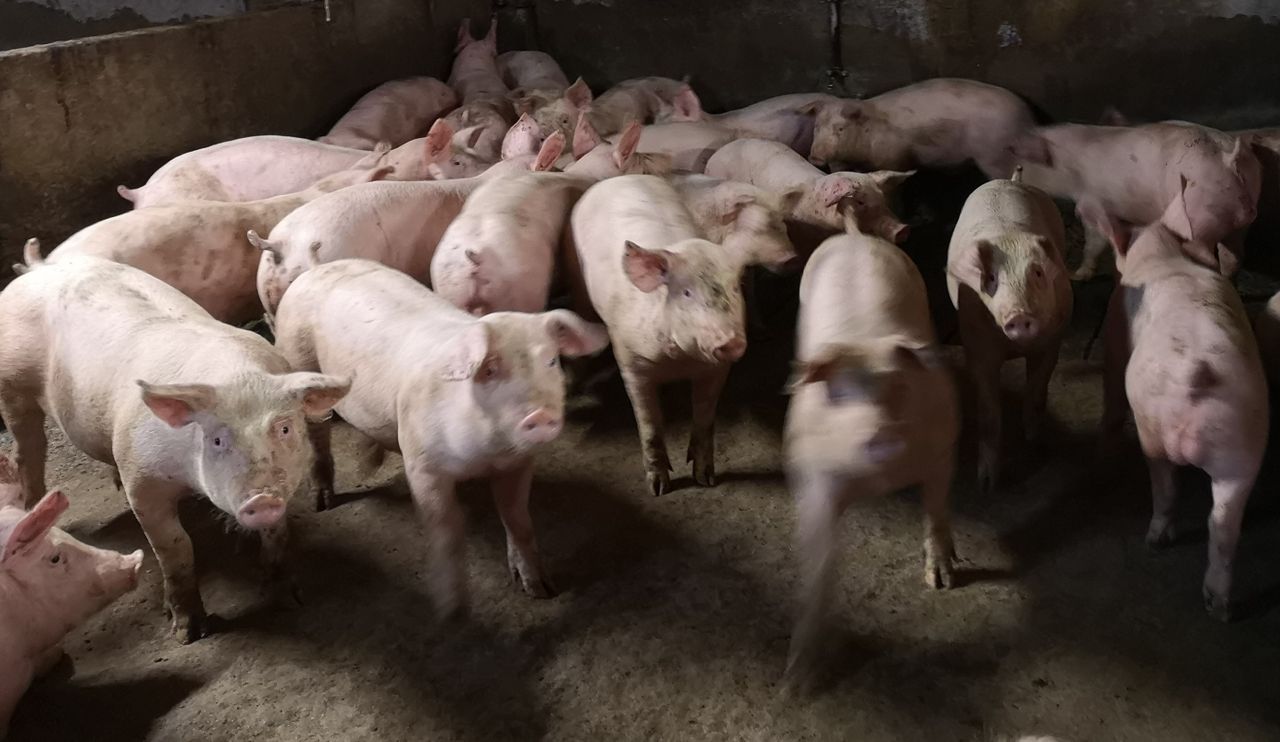
- Pork: Indoor pig farming using farrowing crates scores 27, the lowest of all systems assessed. Taking out crates entirely would boost the score to 47 and be valued at £1.4 billion per year (£2.52 per kg of pork) by UK households. Just limiting crate use to a shorter period of a pig’s life would also have benefits;
- Milk and dairy: Current dairy farming practices score 43, with around 30% of cows suffering lameness, reducing lameness to just 5% of herds would raise the welfare score to 56, and be valued at £1.7 billion per year (11p per litre of milk). This would require improvements that would benefit other aspects of cow welfare;
- Lamb: Using pain relief for lamb castration would increase welfare scores from 53 to 56, worth £320 million annually (£1.12 per kg of lamb). Eliminating castration altogether would raise scores to 60, valued at £717 million per year.
Public and policymakers
The survey found strong public support for welfare improvements, with 85% of respondents agreeing that there is a moral duty to safeguard animal welfare.
86% supported regulation to improve welfare levels across all farm animals.
Prof. Bennett’s method aims to address a long-standing gap in UK policy appraisal.
According to HM Treasury's Green Book, all government policies must be evaluated for costs and benefits, yet until now there has been no standardised, transferable method for valuing animal welfare improvements.
The welfare assessment protocol draws on the widely-accepted Five Domains of Animal Welfare model.
It adapts elements from EU Welfare Quality protocols and expands them to consider animals' mental states and whole-life experiences, rather than just physical measurements taken during farm visits.
The new valuation tables allow policymakers to quickly estimate the benefits of proposed welfare changes.
E.g., if proposing a policy to improve chicken broiler welfare from 40 to 45, policymakers can look up the value (£22.14 per household per year) and multiply by the UK's 28.4 million households, to get the total benefit of £628.8 million annually.
These figures can then be compared against costs to decide if policies represent good value for money.
The research was commissioned by the Department for Environment, Food and Rural Affairs (Defra) and conducted at the School of Agriculture, Policy and Development at the University of Reading.
Welcome research
Commenting on a new model, RSPCA head of public affairs, David Bowles said: "As a nation of animal lovers, people are caring more and more about where their food comes from, and deserve as much information as possible about the welfare of animals reared for food.
“This important University of Reading research confirms consumers are often prepared to pay more if it ensures farmed animals have enjoyed a better life.
“More than one billion farm animals are reared every year in the UK, the majority of which on lower welfare farms that cause huge levels of suffering.
"For more than 30 years, we have driven up standards on farms through RSPCA Assured and it is vital that we continue to improve welfare on farms," he added.
The RSPCA has said that consumer demand is a powerful tool for driving change and added that it is encouraging that the UK Government commissioned this research.
The society has now called on the government to introduce mandatory labelling on all animal products, supporting existing higher-welfare labels, so people can always make an informed choice.